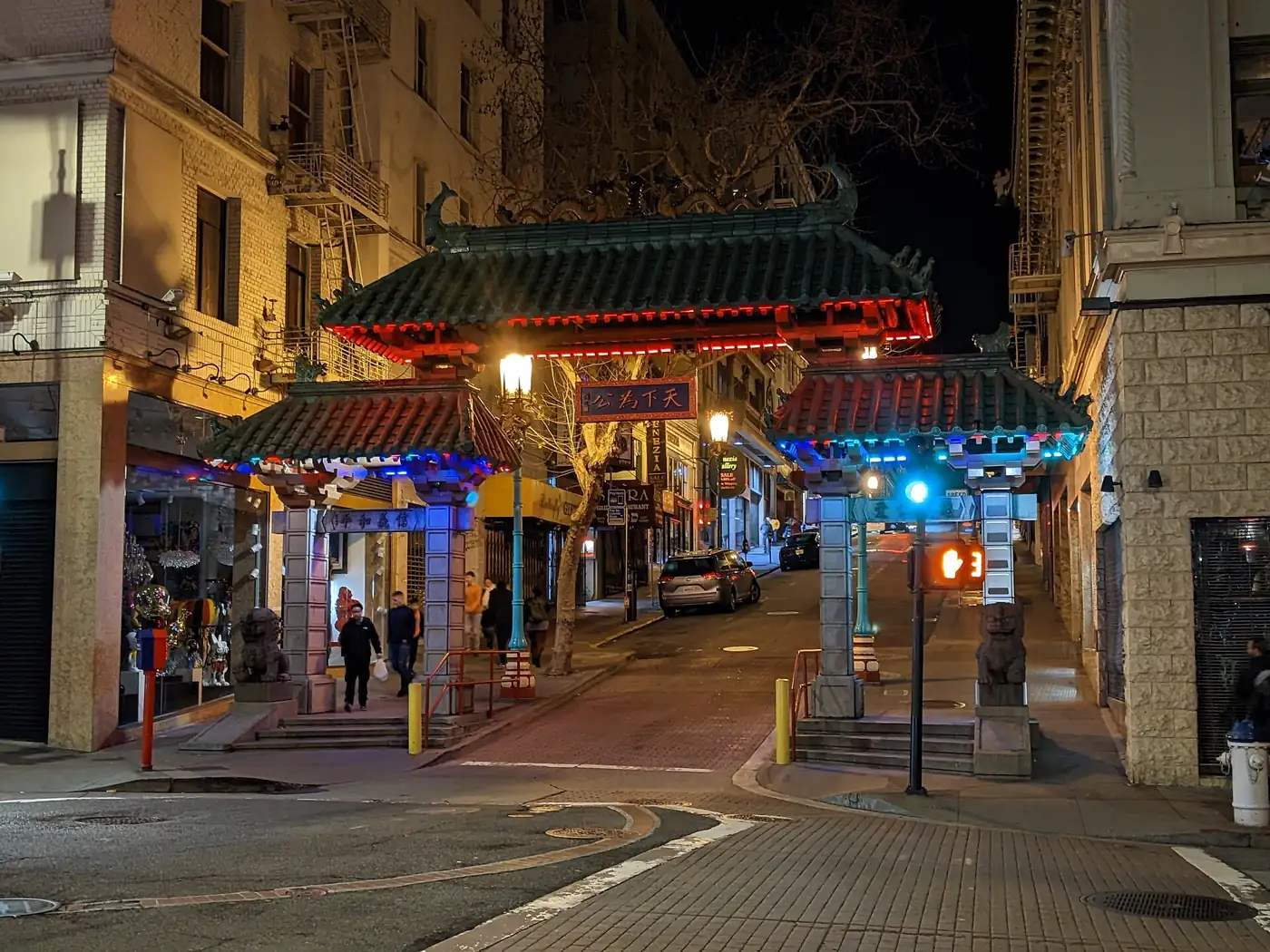
A Chinatown first visit feels richer when it includes something to learn, something to eat and time to observe ordinary neighborhood life. San Francisco’s Chinatown is not a single gateway or photo location. It is a place of businesses, homes, cultural organizations and community routines, and an enjoyable visit leaves room for all of those layers.
Keep the route compact. A half day can include a museum, a walk through the commercial streets and a meal without becoming a race. If you only have an hour, choose one of those experiences properly rather than trying to collect a little of everything.
Choose a cultural anchor first
The Chinese Historical Society of America, at 965 Clay Street, is a useful place to begin planning. Its museum introduces Chinese American history through exhibitions, and its visitor information explains admission and transport options. Check the current opening days before building your route around it; an independently run cultural institution may not follow the schedule you expect from a large museum.
Book your visit first if it is the main reason for the outing. Read the exhibition description beforehand and bring one question you would like the visit to answer. This gives your later walk a point of reference and helps avoid treating architecture and signs as scenery without context.
Walk both destination streets and everyday streets
Grant Avenue offers a familiar starting point for visitors. Nearby Stockton Street presents another view through shops and neighborhood errands. Choose a few blocks of each rather than repeatedly crossing between them. The aim is to compare rhythms, not to decide that one street is more authentic than another.
Give people space at entrances, bus stops and market displays. If you want to stop for a photograph, step out of the main pedestrian stream and check whether someone is trying to enter a doorway behind you. Ask before photographing a person closely or making a shopkeeper part of your image.
Make the meal part of the visit
Choose food according to the menu, the size of your group and your appetite. A bakery purchase and a sit-down lunch offer very different experiences, and neither needs to be framed as the only correct way to eat in Chinatown. Look at ordering instructions before joining a line, then ask about ingredients if you need clarification.
When sharing dishes, agree on the number of orders before approaching the counter. This is especially useful in a small shop where the person taking your order is also serving other customers. Carry only what you can comfortably eat or transport, and save room for a second stop rather than over-ordering immediately.

Account for the slopes
The neighborhood contains hills even when the distances look short. A route that alternates between parallel streets can add climbing without adding much sightseeing. Choose your museum and meal first, then connect them in a sensible order. If your group includes someone who avoids steep grades, look closely at the approach to each destination rather than relying on a general neighborhood description.
The CHSA visitor page lists public transportation options, including Chinatown–Rose Pak station. Confirm your particular journey with SFMTA, especially if elevators, a low-walking route or a specific transfer matter. Allow a little extra time to find the correct station entrance and orient yourself above ground.
Add North Beach only if the day has space
Our North Beach walking guide makes a natural companion to this outing. Still, a neighborhood pairing should leave you time to pause. If your museum visit becomes the highlight, let it take longer and shorten the walking portion rather than rushing through it.
Finish by revisiting something that caught your attention: a shop window, a bakery item, a book about the neighborhood or an exhibition detail. You will leave with a more specific memory than a collection of hurried photographs. For future visits, browse our neighborhood guides and choose one new area instead of repeating the same crowded route.
If you are buying gifts, wait until you have seen a few shops before making every decision. Choose items you can explain or use, and ask questions politely when a business is not too busy. A purchase connected to something you learned during the visit carries more meaning than a bag filled simply because you felt you ought to take home souvenirs.