A cable car ride works best when it is part of the day’s experience, not the connection holding an entire itinerary together. The cars climb through working neighborhoods, share city streets, and attract queues at their best-known terminals. Choose a route that fits what you want to see afterward, check the current service information, and leave time to enjoy the ride. You do not need to cover every line to understand why this small network has become such a strong San Francisco symbol.
Choose among three lines
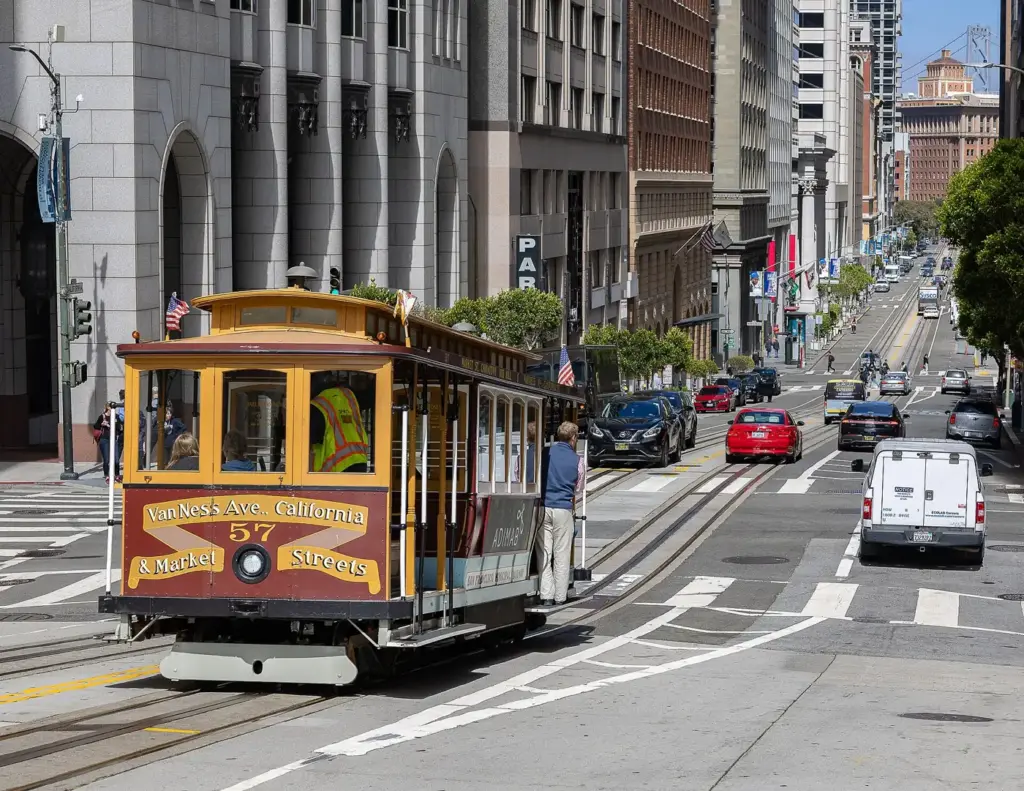
San Francisco operates the Powell-Hyde, Powell-Mason, and California cable car lines. The two Powell routes begin near Powell and Market and continue toward different parts of the northern waterfront. The California line runs between the Financial District side of California Street and Van Ness Avenue. Check the official route maps before choosing: “toward the waterfront” is not a precise enough destination if you have a reservation waiting. Pick the line that places you closest to the next part of your day.
Make one ride the centerpiece
For a first visit, consider one cable car journey followed by a walk and a meal. A Powell route can be paired with the northern waterfront; the California line can be paired with a look around Nob Hill or a downtown outing. These are planning ideas rather than guaranteed connections. Check where you will get off, the terrain afterward, and the walk to your next stop. Leaving the return trip open to Muni gives you more flexibility if the terminal line is longer than expected.
Check fares and passes carefully
Cable car tickets have their own conditions, so do not assume a standard local ride product covers them. SFMTA publishes current single-ride and visitor-pass options. Compare the products against the rides you actually intend to take, rather than buying a pass because it sounds easier. Review terminal prepayment instructions before joining a queue, and keep your ticket or payment method ready. Exact prices and sales arrangements can change, which is why the official fare page should be your final reference on the day.
Decide where to board
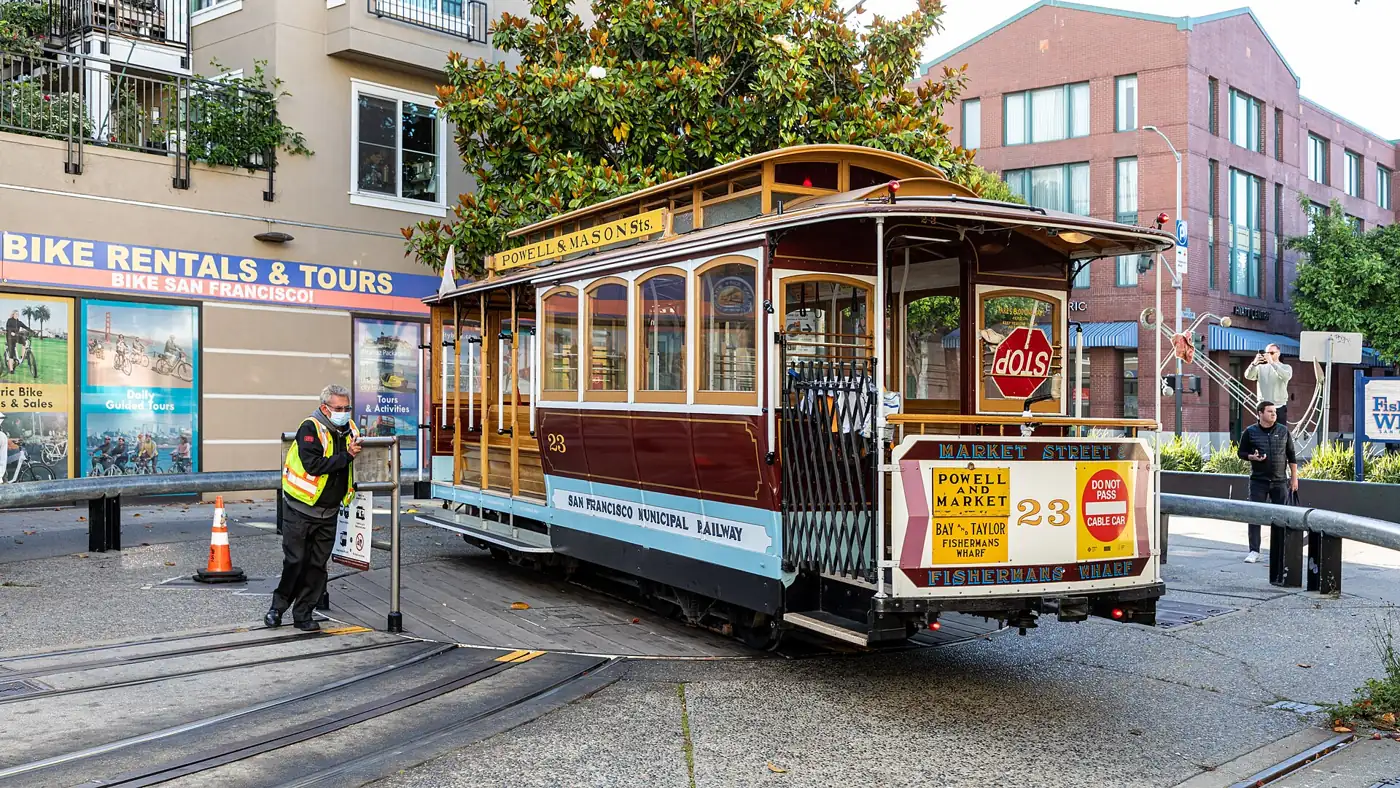
Terminals make the route easy to understand and let you see the turntable operation on the Powell lines. Intermediate stops can be useful, but a passing car may be full. Look for the designated cable car stop sign and wait where directed. Do not step into the street to flag a car from an unsafe position or expect boarding at every intersection. For a group, agree whether staying together matters more than catching the next available car; that decision is easier before the vehicle arrives.
Enjoy the ride with your attention on the street
Listen to the crew, hold on securely, and keep your body within the space they direct you to use. Save complicated camera adjustments for a stop. Before stepping off, wait for the car to stop and check for nearby traffic. Cable car movement and pedestrian signals are not interchangeable; cross only when it is appropriate for pedestrians. The setting is memorable precisely because the vehicle travels through a living city, so the usual attention to streets and crossings still matters.
Know the practical limitations
SFMTA states that cable cars do not offer accessible boarding, and bicycles are not allowed aboard. If your group needs a step-free journey, plan another Muni service rather than relying on a cable car. A bus or accessible transit route can still support a day that includes watching the cars, exploring a terminal area, or visiting the Cable Car Museum. Build the route around the person with the most restrictive travel needs so nobody is left with an unexpected uphill detour.
Leave room for the museum and the neighborhood
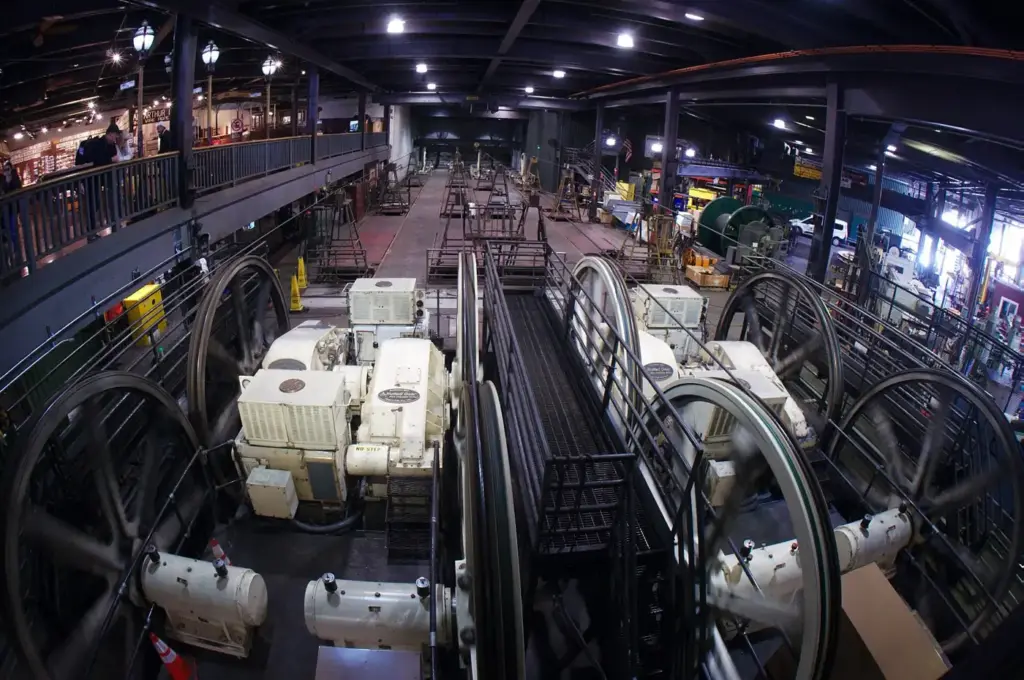
The Cable Car Museum provides a useful next stop for people interested in how the system works. Consult its own visitor information before adding it, and check the walk from your chosen line. A museum visit, coffee break, and one ride can fill a satisfying portion of a day without racing between landmarks. If service is disrupted, keep the museum or neighborhood portion and substitute another transit route. Your outing should still make sense even if the cable car ride has to move to another day.
Keep exploring
For everyday connections, see Muni vs BART. If your cable car outing includes Nob Hill or Russian Hill, use our hill-walking planning guide before choosing the walking route.